JMTS User Guide
Human Resource Management
The Human Resource Management (HRM) module in the Job Management & Tracking System (JMTS) is designed to help organizations efficiently manage their workforce within a centralized ERP platform. It provides structured tools for maintaining employee records, monitoring attendance, managing leave, supporting payroll processes, and generating HR reports. Built with security and accountability in mind, the HRM module integrates seamlessly with other JMTS modules to ensure accurate data flow across departments. Whether managing a small team or a large enterprise workforce, the Human Resource Management module enables streamlined operations, improved compliance, and informed decision-making.
Definitions
Employee
An Employee is an individual formally engaged by an organization to perform assigned duties and responsibilities in exchange for compensation. Within the Job Management & Tracking System (JMTS), an Employee is recorded in the Human Resource Management module with relevant employment details such as position, department, employment status, and service history. An employee may also be assigned system access as a User, depending on their role and responsibilities within the organization.
Employment Position
An Employment Position is a formally defined role within an organization that outlines a specific set of duties, responsibilities, reporting relationships, and required qualifications. In the Job Management & Tracking System (JMTS), an Employment Position is used within the Human Resource Management module to classify employees according to their job function, organizational level, and departmental assignment. Each Employment Position helps establish structure, accountability, and alignment with the organization’s operational objectives.
Department
A Department is a defined organizational unit within a company or institution that is responsible for a specific function or area of operations. In the Job Management & Tracking System (JMTS), a Department is used to group employees, assign responsibilities, and organize workflows according to functional areas such as Finance, Human Resources, Operations, or Administration. Departments support structured reporting lines, accountability, and efficient management across the organization.
Adding Employees
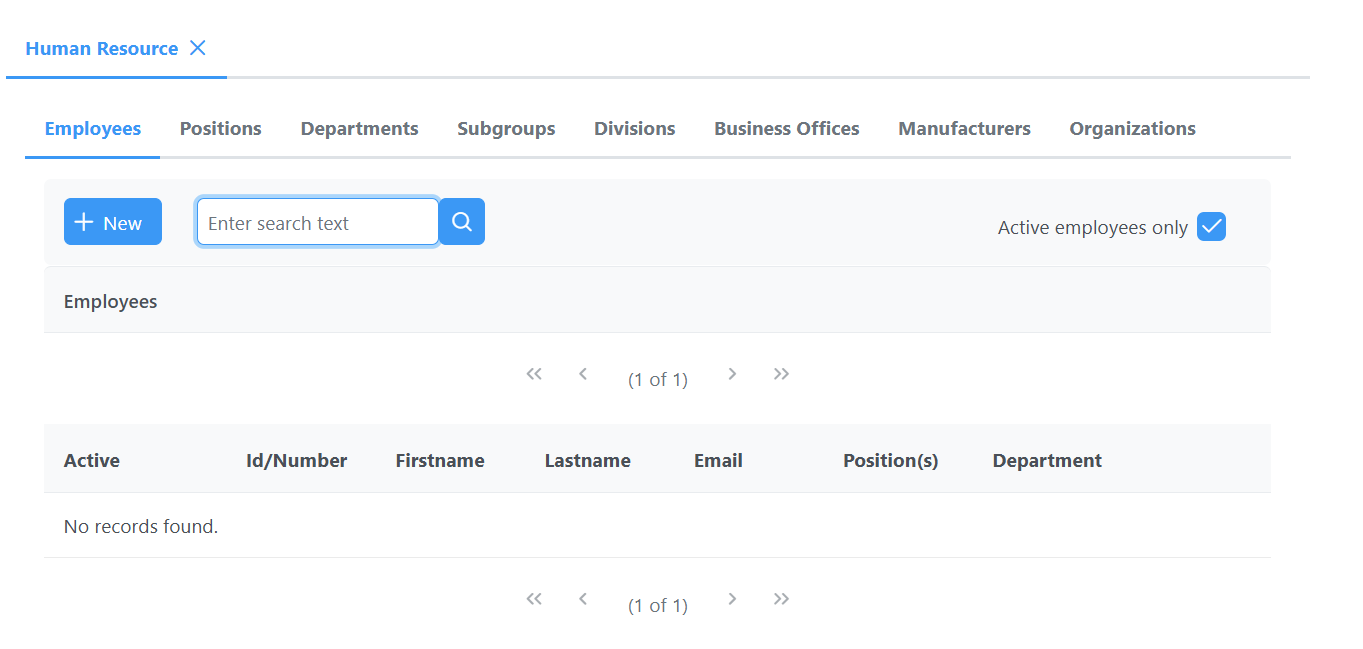
An employee can be added by clicking the "New" button as shown in Figure 1 below:
Figure 1: Employee Window
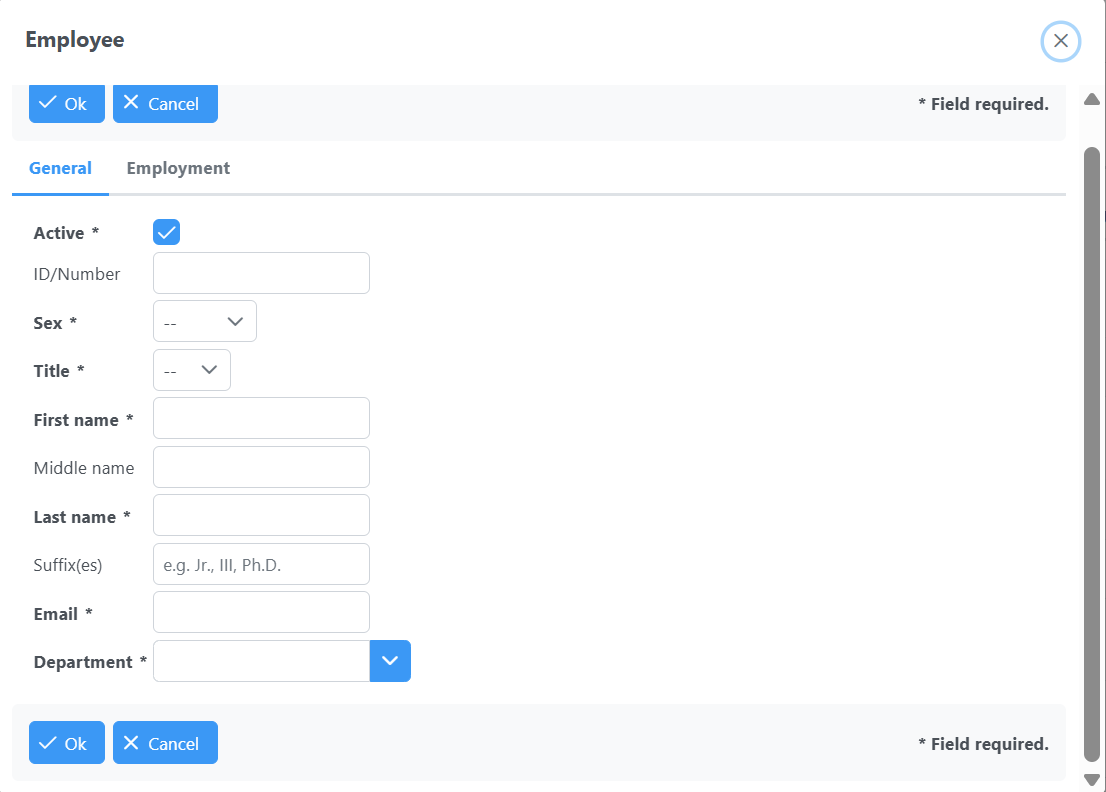
All the required fields on the General tab of the Employee Dialog must be filled out as shown in Figure 2.
Figure 2: Employee Dialog
Adding Departments
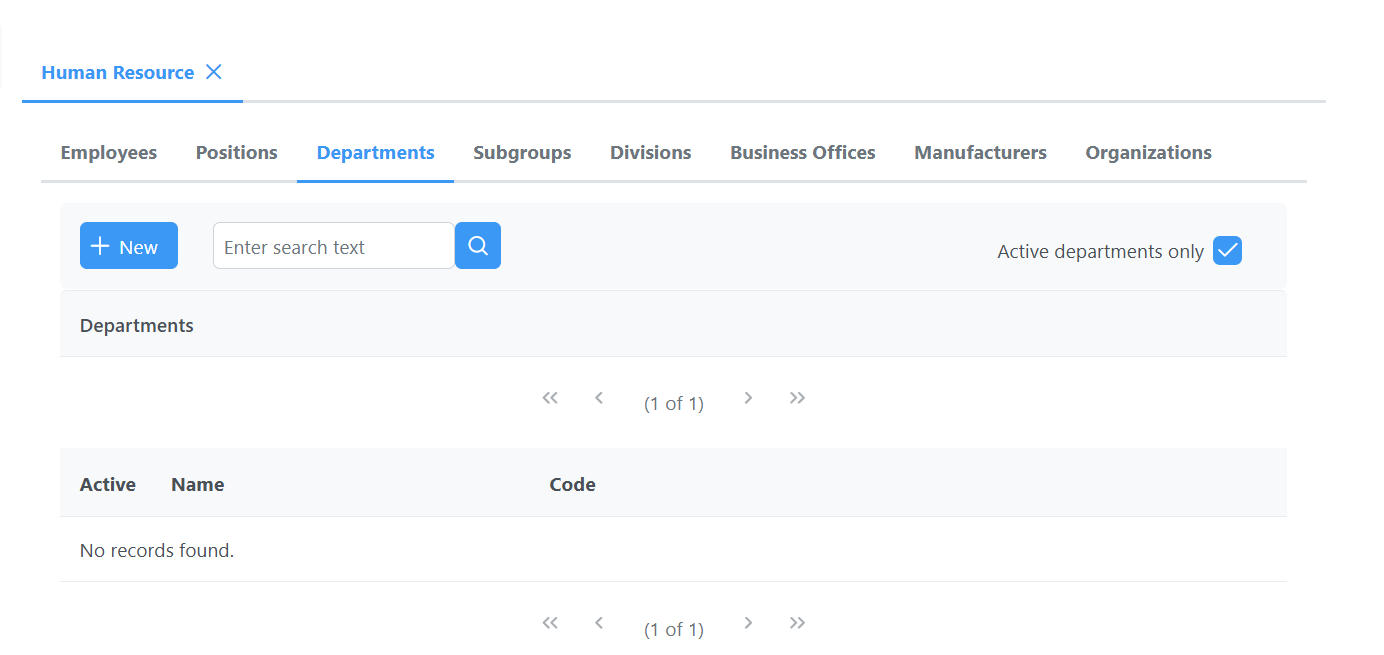
A department can be added by clicking the "New" button as shown in Figure 3 below:
Figure 3: Department Window
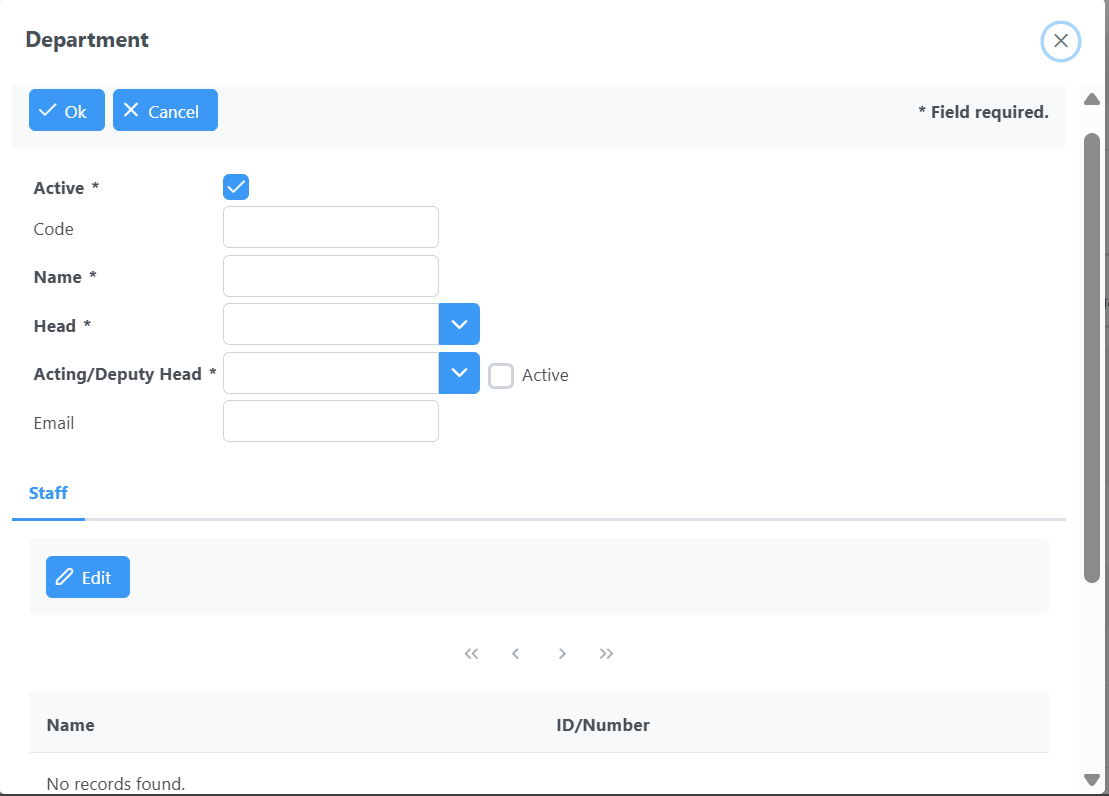
All the required fields on the Department Dialog as shown in Figure 4 must be filled out. Staff can be added by clicking the Edit button in the Staff tab.
Figure 4: Department Dialog
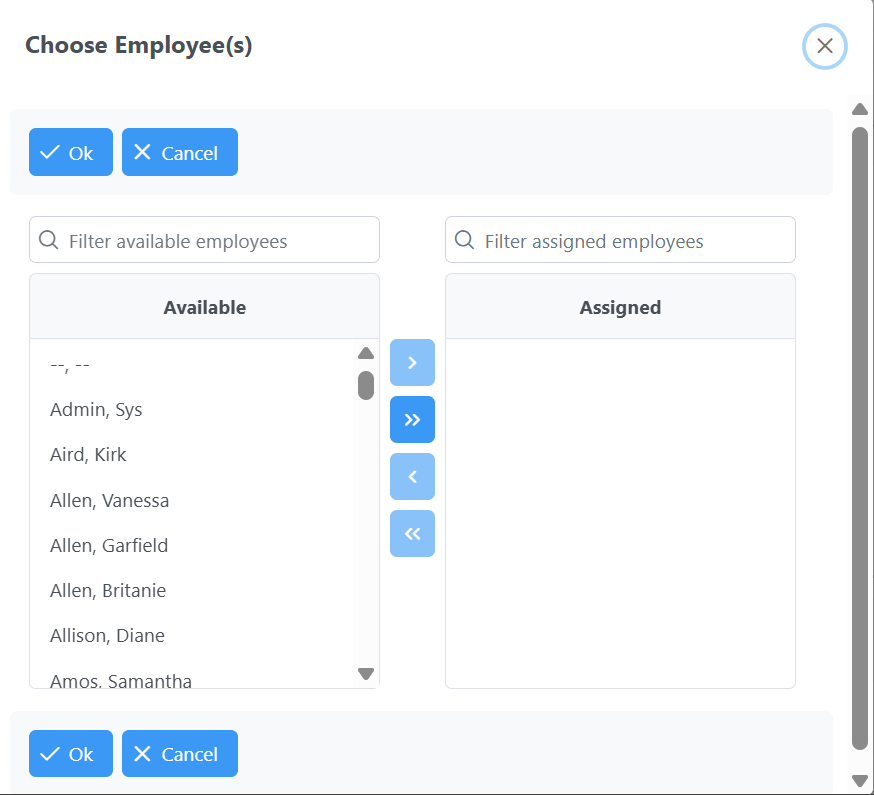
The Employees (Choose Employee(S)) dialog shown in Figure 5 can be used to add employees to a department. Employees can be moved between the Available and the Assigned columns by clicking the appropriate buttons between the columns or by double-clicking an employee's name.
Figure 5: Employees Dialog